
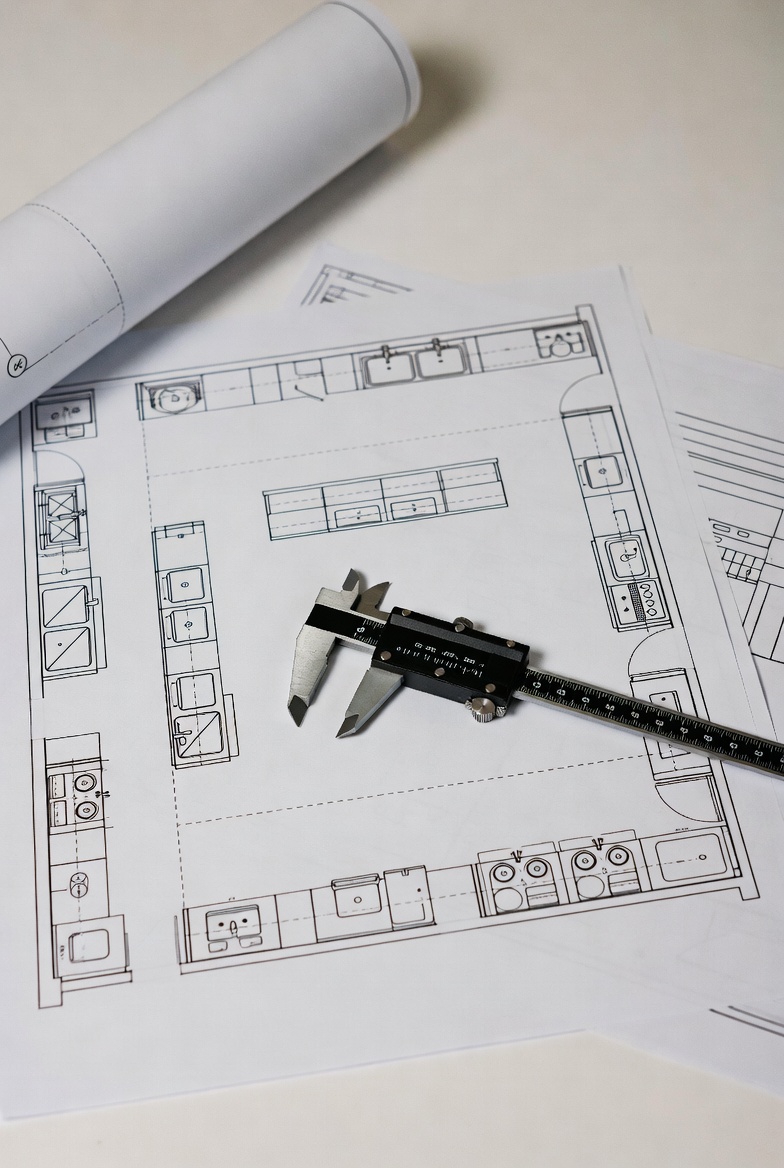
When you’re dreaming of a new high-speed combi-oven, a 40-gallon steam kettle, or a high-capacity dishwasher, it’s easy to focus on the features and the output. But before you sign the lease or buy the equipment, you have to look at the “hidden” side of the kitchen: your utility infrastructure.
In a commercial setting, “plug and play” rarely exists. Your building’s bones—gas, electric, and water—must be capable of supporting your equipment’s appetite.
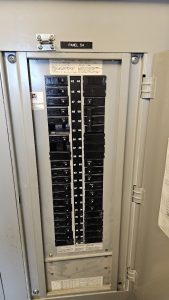
1. The Power Gap: Single-Phase vs. Three-Phase
Many high-end kitchen appliances require Three-Phase Power. If your building is older or was previously a retail space, it might only have Single-Phase. Converting a panel or bringing in a new service from the street is a massive expense that can stall a project for months. Knowing your voltage and phase availability is the very first step in equipment selection.
2. The BTU Bottleneck
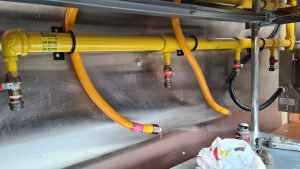
Gas equipment isn’t just about having a pipe in the wall; it’s about volume. Every appliance has a BTU (British Thermal Unit) rating. If you add a heavy-duty charbroiler to a line that wasn’t designed for it, you might find that when the broiler is on, your ovens won’t hold temperature. We ensure your gas manifold and regulator are sized for your peak demand, not just your average use.
3. Water Quality & Drainage
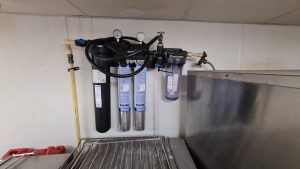
It isn’t just about having a tap. Modern equipment—especially steam ovens and dishwashers—is incredibly sensitive to water hardness. Without the right filtration or softening system, scale buildup can destroy a $20,000 oven in less than a year. Additionally, the “invisible” side of water—indirect waste lines and grease interceptors—must be mapped out early to meet health and building codes.
4. The Cost of “After-the-Fact” Fixes
The most expensive way to build a kitchen is to realize you’re short on power after the floors are poured and the walls are closed. Our Engineered Drawings process identifies these utility gaps during the planning phase, allowing you to upgrade your infrastructure or pivot your equipment choices before a single dollar is wasted on incorrect parts.